injury management
concussion
What is concussion?
Concussion is a traumatic brain injury resulting in a disturbance of brain function. In rugby it is usually caused by a direct blow to the head or when knocks to other parts of the body result in rapid head movement (eg. whiplash type movement).
Any athlete with a suspected concussion should be immediately removed from practice or play and should not return to sport activity or any activity with a risk of head contact, fall or collision until assessed medically, even if their symptoms resolve.
⚠️ This page contains some useful information about concussion but does NOT constitute medical advice. It’s crucial that you check concussion protocols and guidelines with your nation’s governing body and speak to a medical professional if you have any concerns.
Why is it so important?
Concussion isn’t just a bump on the head, it’s a serious brain injury and ignoring it or returning to play too soon can be dangerous.
A second blow to the head before the brain has healed can cause second impact syndrome, a rare but potentially fatal condition.
Repeated or poorly managed concussions have also been linked to long-term problems, including memory issues, mood changes, and early dementia.
Remember, you don’t have to be knocked out for it to be a concussion. Loss of consciousness happens in fewer than 10% of cases, so it’s important to recognise the signs and symptoms of concussion and to know what to do if you suspect one.
recognising suspected concussion
visible clues that suggest concussion may include:
Loss of consciousness or responsiveness
Lying motionless on the playing surface
Falling unprotected to the playing surface
Disorientation or confusion, staring or limited responsiveness or inability to respond appropriately to questions
Dazed, blank or vacant look
Seizure, fits or convulsions
Tonic posturing
Slow to get up after a direct or indirect hit to the head
Unsteady on feet / balance problems or falling over / poor coordination / wobbly
Facial Injury
symptoms of suspected concussion
physical symptoms
Headache
“Pressure in head”
Balance problems
Nausea or vomiting
Drowsiness
More sensitive to light / noise
Dizziness
Blurred Vision
Fatigue or low energy
“Don’t feel right”
Neck Pain
changes in emotions
More emotional
More irritable
Sadness
Nervous or anxious
changes in thinking
Difficulty
concentrating
Difficulty
remembering
Feeling slowed down
Feeling like “in a fog”
if in doubt, sit them out.
FAQs
-
It’s impossible to completely eliminate the risk of concussion in a contact sport such as rugby. That being said there are ways we can help to mitigate that risk.
The two best ways are to work on your tackle technique - ensuring it’s both safe and effective, and improving your neck strength to aid head stability and reduce the impact of whiplash type movements. -
The correct concussion management for each player will vary greatly based on the player’s age, concussion history, individual needs, and their access to medical provision/physio support.
It’s essential that your return to play and concussion management is led by a medical professional.
-
Second impact syndrome is a condition in which an individual experiences a second head injury before completely recovering from a prior head injury.
Although it is rare, experiencing a second concussion before symptoms of a first concussion go away may result in rapid brain swelling. This can lead to death.
It's important that athletes never return to sports while they're still experiencing symptoms of concussion.
-
An HIA is a Head Injury Assessment.
It is an in game assessment of a player always conducted by a doctor after a head knock or suspected head injury to determine whether or not a player has suffered a concussion. These are only available at the elite/professional level of the game.
-
If you have a suspected concussion you should have been immediately removed from the game or training session. You should not return until you have been assessed medically and been cleared to play, even if the symptoms resolve.
In the meantime:
Do:
Do report any symptoms to your doctor or team physio
Do seek immediate medical attention if symptoms worsen
Do limit screen time
Do not:
Don’t be left alone initially (at least for the first 3 hours). You should have a responsible adult with you.
Don’t drink alcohol or take recreational drugs
Don’t drive until cleared to so so by a healthcare professional
Don’t return to any activity with risk of head contact, fall or collision and don’t take part in any sport activity until cleared to do so by a medical professional.
-
Return to contact is a phased protocol to help you return to rugby. This is used after a concussion (or after any big injury) and should be managed by your club’s medical team and coaches.
Every organisation or club will have their own return to play protocols which you will follow so that you can get back to training and playing as safely as possible.
concussion resources
World Rugby Concussion Guidance
Headcase
Concussion Guide
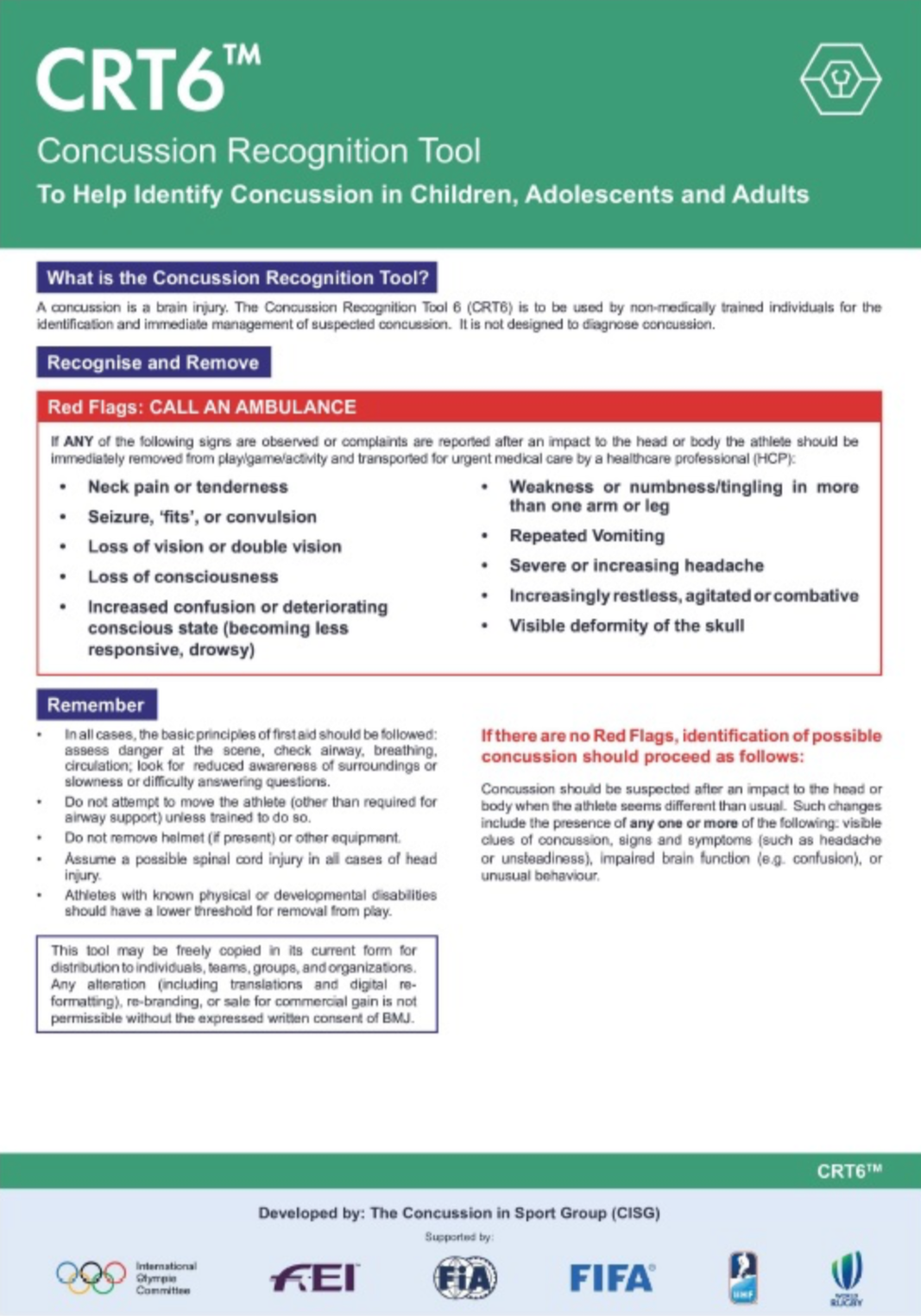
Concussion Recognition Tool

UK Grassroots Sport Guidelines