RED-S & Period Loss: What You Need to Know
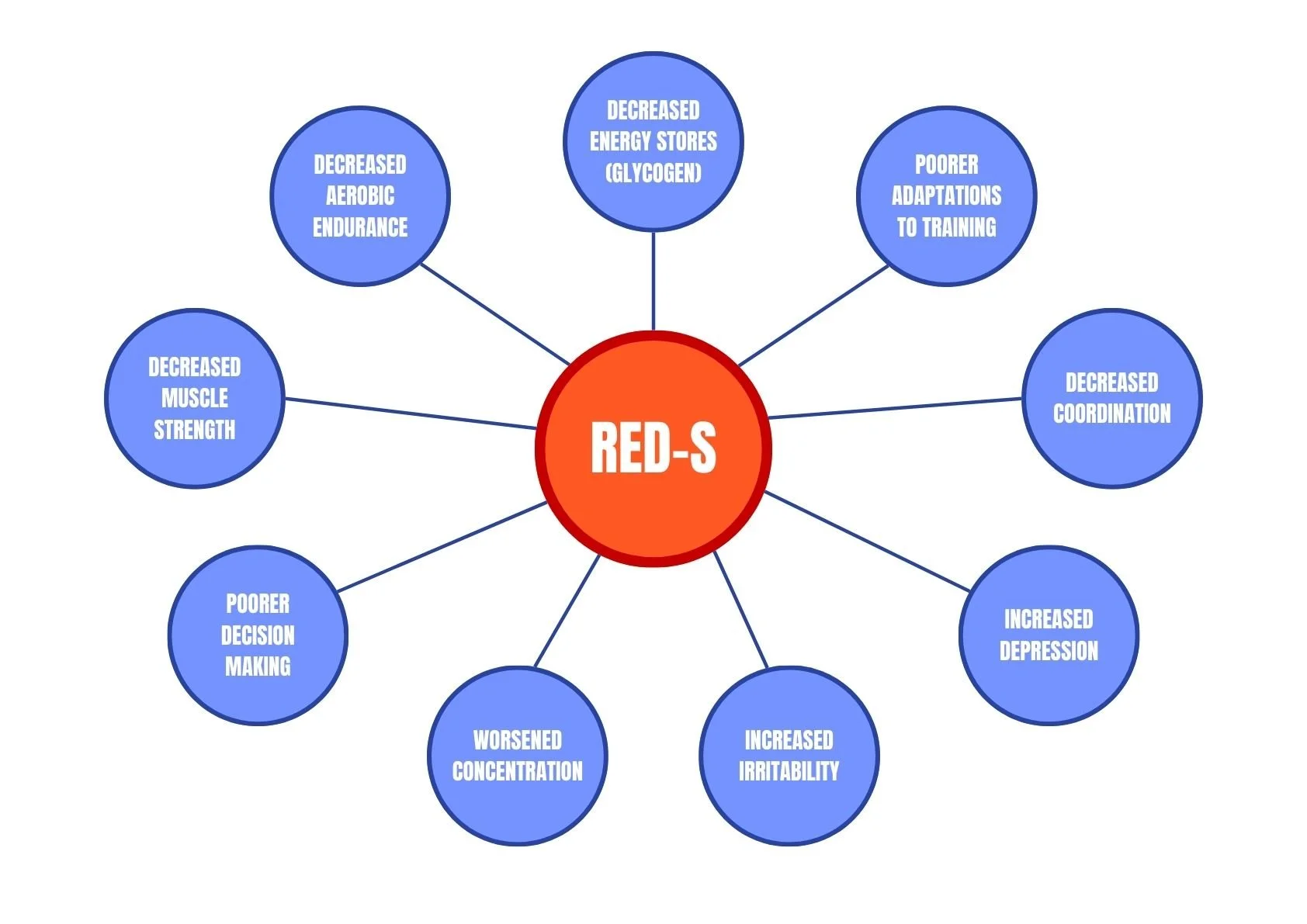
First things first: what is RED-S?
Relative energy deficiency in sport (RED-S) is a condition that occurs when more energy is being used by the body than being taken in over a prolonged period.
Loss of periods is known as amenorrhoea and is one of the key signs of Relative energy deficiency in sport (RED-S).
Why does it matter?
If you don’t have enough energy available for training it can impact your body’s ability to maintain optimal health. Energy deficiency can lead to a disruption, or loss, of menstrual function and the loss of the important menstrual cycle hormone, oestrogen. This can also impact bone health. RED-S is often not detected until athletes stop having periods or start to experience bone fractures.
Why does it happen?
Female hormones are extremely sensitive to nutrient intake and in particular to carbohydrates. This is because not providing the body with adequate amounts of carbohydrate can significantly disrupt the production of oestrogen and progesterone (Gastman and Hanan, 2021). These hormones are central to the functioning of the menstrual cycle and the maintenance of bone health.
This means that carbohydrate restrictive diets or low carbohydrate high fat (LCHF) diets may not always be suitable for female athletes as the body simply may not have enough fuel to sustain itself.
For example:
Endurance activities rely on food in the form of carbohydrates, which provide glycogen to produce energy as well as to replenish energy stores afterwards.
To build muscle and repair any damage caused by training we have to consume foods rich in protein.
Fat intake is also important as it provides the body with energy, supports cell growth, and helps the body absorb vital nutrients.
What should I look out for?
Whether you’re a coach, player or parent/guardian of an athlete, you need to be aware of the warning signs of RED-S in athletes:
Irregular or absent periods
Difficulty staying warm in the winter and cool in the summer
Low muscle mass
Pre-occupation with food and eating
Increased prevalence of illnesses and injuries
Decrement in performance
Excessive tiredness and lethargy
Poor recovery from training sessions
Poor sleep patterns
Digestive problems such as constipation or bloating
Perfectionist tendencies
High levels of anxiety
Becoming withdrawn or reclusive.
If you’re noticing signs of RED-S and/or haven’t had a period in 3 months this should raise alarm bells and you should speak to your GP and/or team doctor.