
nutrition
protein & Carb requirements

Carbs & protein: how much do rugby players actually need?
As athletes we don’t want to fall into the trap of over training and under fuelling, but equally we don’t want to be eating far more than our bodies need.
Both carbs and protein are vital for performance, but knowing how much of each to eat before games or for training can be pretty confusing.
Performance Nutritionist, Beth Vickers, has put together this practical guide to make things simple - sharing the same expert knowledge she provides to professional players in the PWR.
Before a game
carbohydrate requirements
Before a game carbohydrates are the big focus. To maintain energy levels, focus, critical thinking and power for 80 minutes of rugby, it’s essential to start the game with full muscle glycogen (carbohydrate stores).
This takes 24-36 hours of regular fuelling to achieve so we need to start this the day before game day (game day-1).
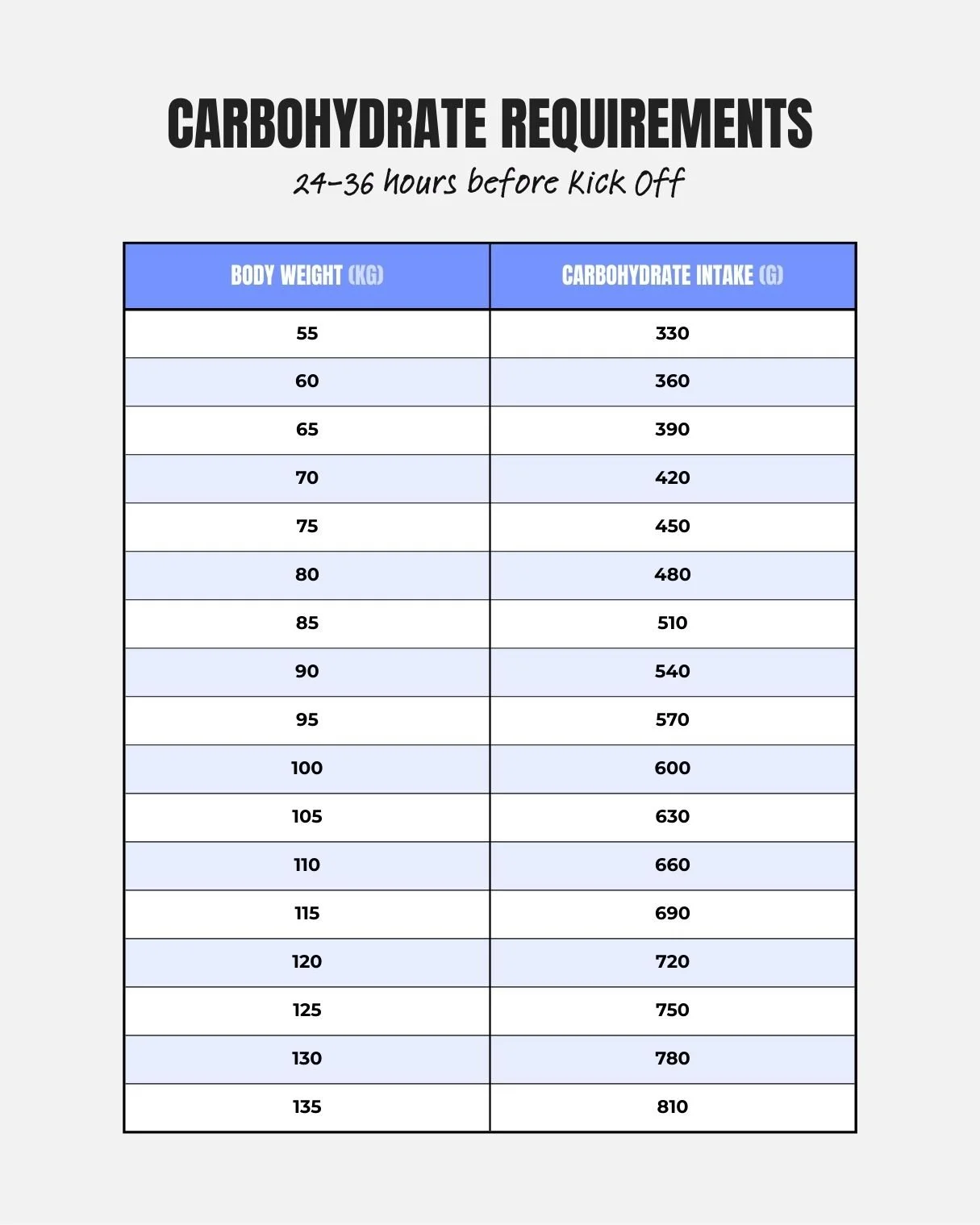
In these 24-36 hours before kick off we want to aim for 6g carbohydrate/kg body weight, spreading out our carbohydrate intake across 5-6 meals or snacks.
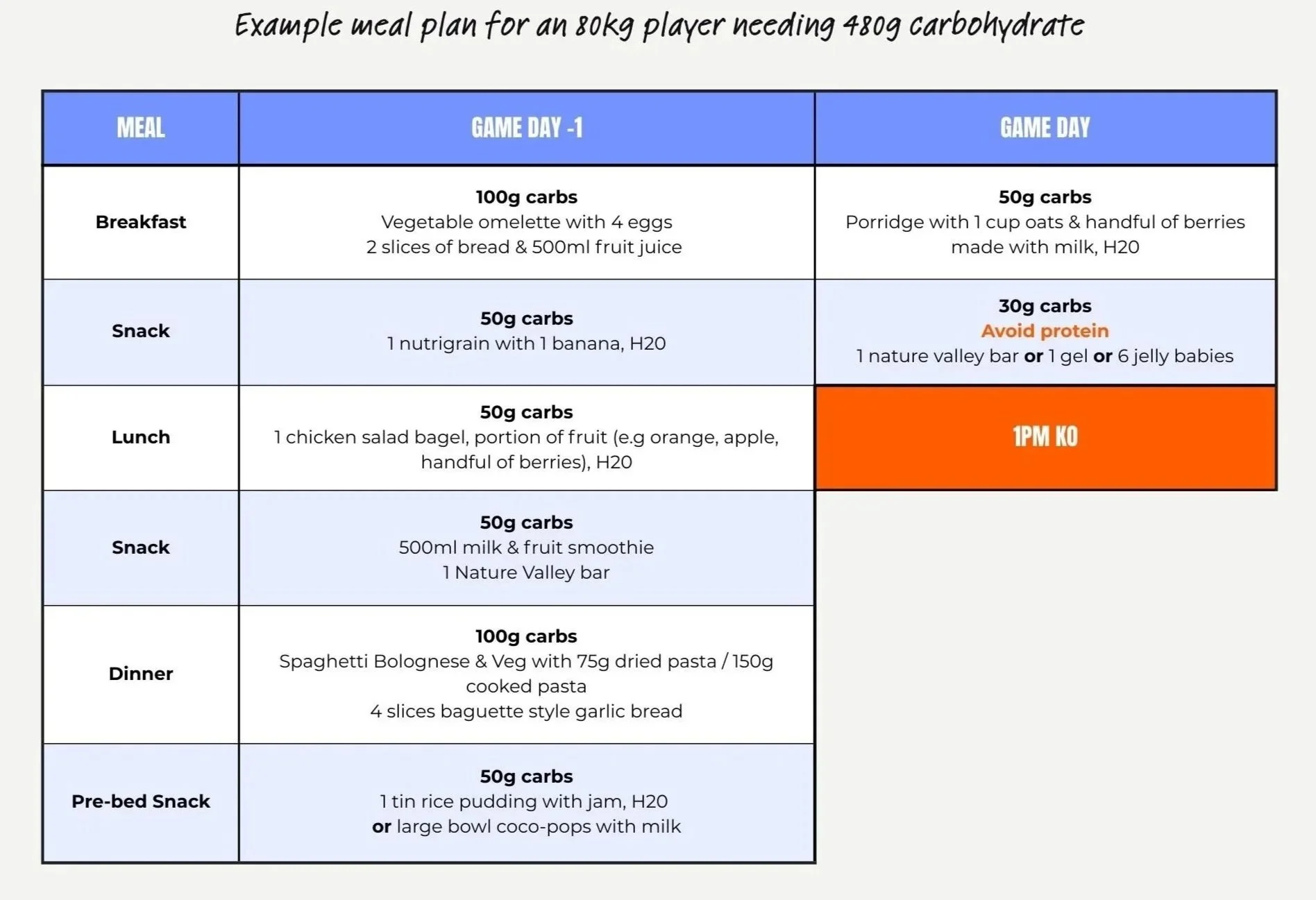
For an example an 80kg player would need 480g of carbs spread across the 24-36 hours before the game.
Protein requirements
Protein isn’t as much of a focus pre-game as carbohydrates, but is still worth thinking about.
The day before a game and up to 3-4 hours before kick off, there’s no problem eating some protein, however once we get closer to kick off we want to try and avoid it.
Like high-fat and high-fibre foods, high protein foods close to kick off can cause gut discomfort and impact our performance.
For more info on what to eat immediately before, during and after a game check out our game day fuelling guide.

Example meal plan
for training
carbohydrate requirements
Making sure to properly fuel for training is important for every rugby player, but especially for female athletes, as our hormones are particularly sensitive to carbohydrate intake.
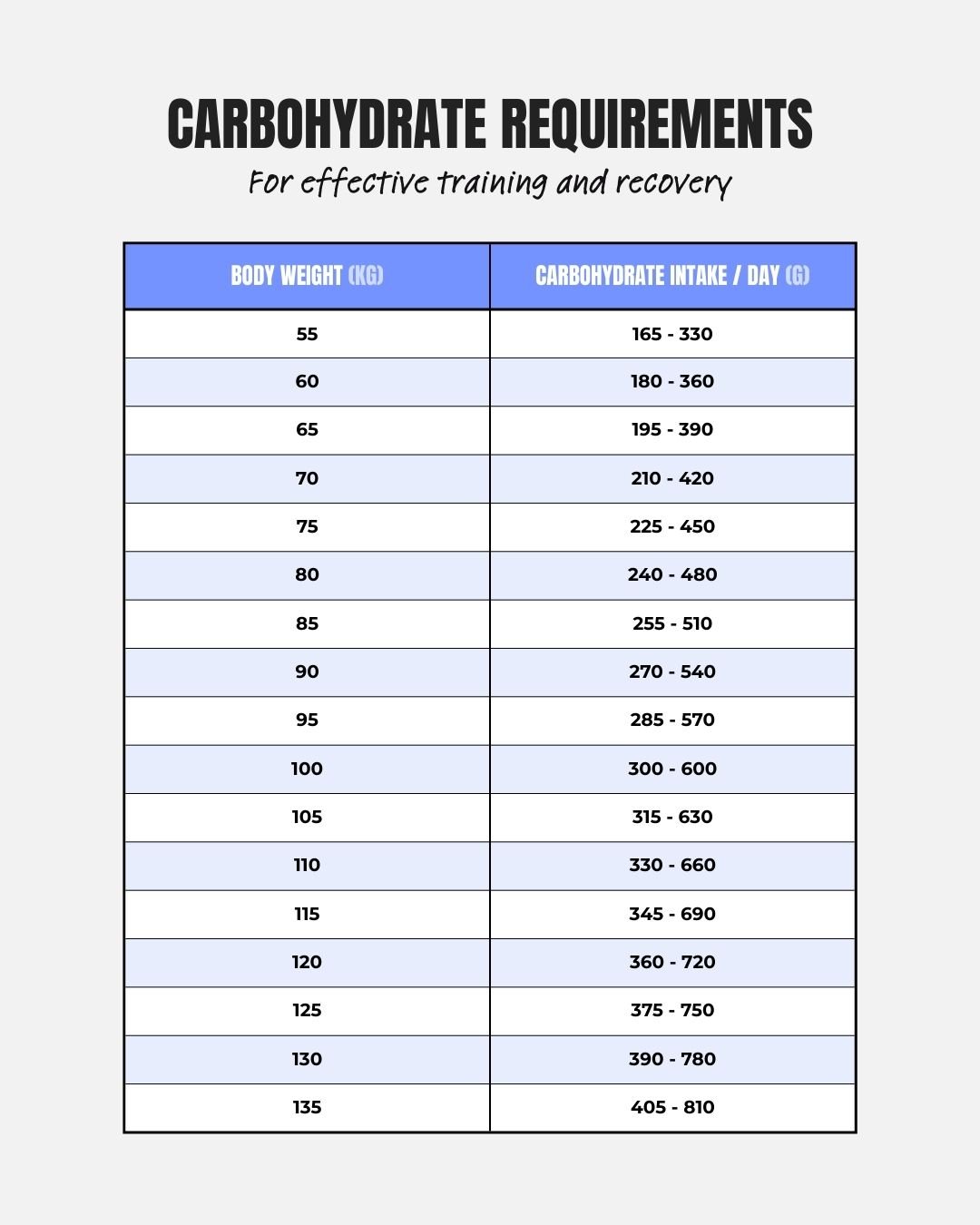
Our carbohydrate requirement will vary depending on the intensity of a training session with light training requiring around 3g of carbohydrate per kilogram of body weight and intense training needing up to 6g per kg of bodyweight each day.
For example, a 90kg player may need around 270-540g of carbohydrate per day, depending on training intensity whereas a 60kg player might need 180-360g to train optimally and recover from the session.
Protein requirements
Protein isn’t just for building muscle. It helps repair and rebuild tissue, supports immune function, forms cells, produces hormones and enzymes, repairs DNA, and transports nutrients throughout the body. This means it’s really important to make sure we’re getting enough protein to train and recover effectively.
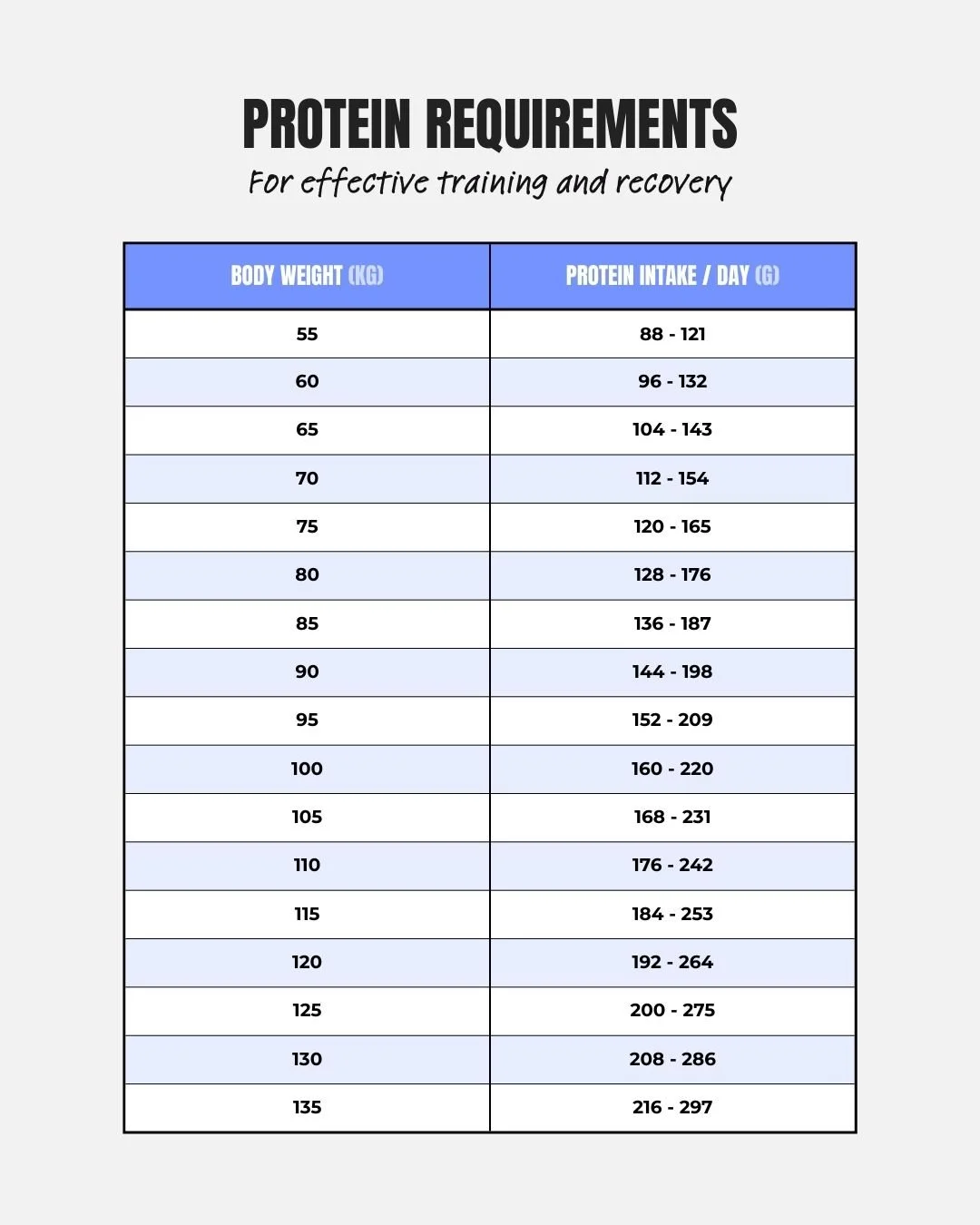
Most rugby players need around 1.6–2.2 g of protein per kg of bodyweight per day.
For example, a 70 kg player may need roughly 112–154g of protein per day, depending on training load and injury status. This works out as around 30g of protein per meal, plus a protein-containing snack.
more rugby nutrition guides




Meet your coach
Beth is a registered sports nutritionist and research assistant who’s spent the last 5 years working across elite and development pathways in rugby, hockey, athletics, and more. She currently works with Sale Sharks women in the PWR and with British Lacrosse as Head of Nutrition, so she knows what it takes to fuel elite athletes!
It’s not just about performance though. Beth also supports NHS staff with complex physical or mental health conditions and neurodiversity.